Diagnostics That Reveal Hidden Building Performance Issues
Thermal Imaging in Trenton for identifying insulation gaps and air leakage invisible during standard inspections
Standard visual inspections cannot reveal temperature differences behind finished walls, above ceilings, or within building cavities where insulation has settled or air leaks through hidden pathways. Thermal imaging captures surface temperature variations that indicate these performance deficiencies, allowing Evolution Sprayfoam, LLC to identify problems before recommending solutions. Property owners use this diagnostic tool when rooms stay uncomfortable without an obvious cause, when energy costs increase unexpectedly, or before purchasing a building to assess envelope conditions that affect long-term operating costs.
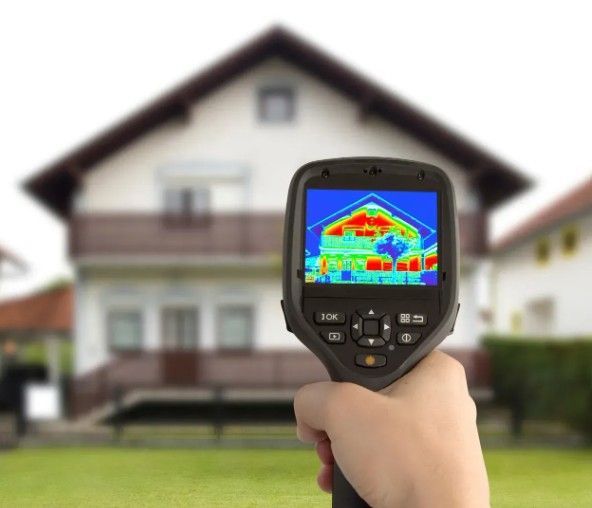
The process involves using an infrared camera to scan interior and exterior surfaces during conditions that create temperature differences between the inside and outside. Cool spots on interior walls during winter indicate missing insulation or air leakage bringing outdoor temperatures into the envelope, while warm spots during summer reveal areas where attic heat radiates through inadequate ceiling insulation.
Arrange an evaluation to assess building-envelope performance using thermal imaging before planning insulation or air sealing improvements in Trenton, Kansas City, Chillicothe, and surrounding areas.
What Thermal Imaging Reveals About Building Envelopes
Imaging works by detecting infrared radiation emitted from surfaces at different temperatures. Areas with insufficient insulation appear cooler in winter because heat escapes more rapidly through those sections, while air leakage shows up as distinct temperature patterns where conditioned air exits or outdoor air infiltrates the envelope. The findings guide material selection and installation priorities, ensuring that improvements address the actual performance gaps rather than assumptions about where problems exist.
After imaging is completed, you receive documentation showing temperature variations across walls, ceilings, and floors with clear identification of areas that need attention. The images reveal insulation voids behind drywall that would otherwise require invasive investigation, air leakage at rim joists and penetrations that explain persistent drafts, and thermal bridging through framing members that reduces the effectiveness of cavity insulation. These findings eliminate guesswork and allow contractors to target improvements precisely where they will deliver measurable performance gains.
Thermal imaging does not repair performance issues directly but provides the diagnostic information needed to plan effective solutions. The service works best when temperature differences between indoor and outdoor conditions exceed twenty degrees, making late winter and midsummer ideal times for imaging in Trenton's climate where seasonal extremes create clear thermal contrasts.
What Property Owners Usually Ask
Questions about thermal imaging often focus on what the technology can detect and how the findings inform improvement decisions.
What conditions are necessary for accurate thermal imaging?
Imaging requires a temperature difference of at least fifteen to twenty degrees between inside and outside air, and surfaces must be accessible without obstructions that block the camera's view of walls, ceilings, and floors.
How does thermal imaging differ from a blower door test?
Thermal imaging reveals temperature variations that indicate insulation gaps and air leakage locations, while a blower door test measures total air leakage volume and creates pressure differences that make leakage pathways more visible during imaging.
When should thermal imaging be performed during a building evaluation?
Imaging should occur before planning envelope improvements to identify specific deficiencies, or after insulation and air sealing work to verify that temperature variations have been eliminated and the envelope performs as intended.
Why do some insulation gaps not appear during a visual inspection?
Insulation voids behind finished drywall, settled insulation at the top of wall cavities, and air leakage through framing gaps remain hidden until thermal imaging detects the temperature differences they create on interior surfaces.
What happens after thermal imaging identifies performance issues?
The findings guide recommendations for insulation upgrades, air sealing, or duct repairs targeted at the specific areas contributing to heat transfer and air leakage, allowing improvements to address root causes rather than symptoms.
Evolution Sprayfoam, LLC uses thermal imaging to provide clear diagnostic information before recommending insulation or air sealing solutions tailored to your building's actual performance gaps. Call (660) 635-0147 to schedule imaging and review findings that will inform your envelope improvement decisions.