Addressing Leaks Without Replacing the Entire Roof
Metal Roof Restoration in Kansas City for roofs experiencing leaks, corrosion, and seam failure
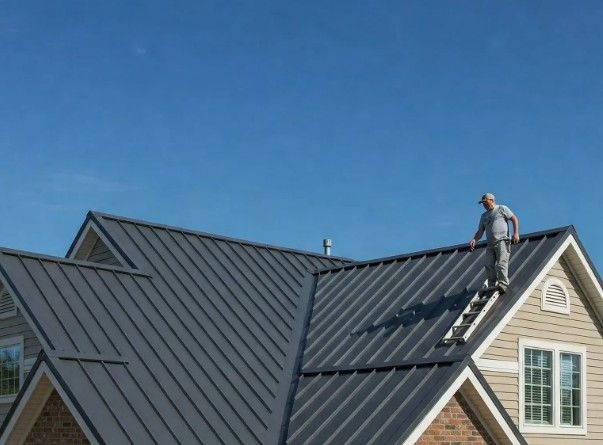
Leaks at seams, fastener holes, and corroded panels often develop long before a metal roof reaches the end of its structural life. Evolution Sprayfoam, LLC restores metal roofs using specialized coatings and sealants that target vulnerable areas, stop water infiltration, and extend the roof's useful life without requiring full replacement. Property owners in Kansas City, Independence, Lee's Summit and the surrounding area face metal roof deterioration caused by fastener backout, thermal movement that opens seams, and rust formation where protective finishes have worn away or sustained impact damage.
Restoration begins with identifying all leak sources, cleaning rusted areas, applying corrosion-inhibiting primers where metal is exposed, and sealing seams and fasteners with elastomeric sealants or coatings designed to flex with the roof's thermal expansion. The approach varies depending on roof pitch, panel type, and the extent of corrosion, but the goal remains consistent: stop water entry, protect metal surfaces, and improve waterproofing without tearing off serviceable panels.
Schedule a roof inspection to evaluate leak sources and determine whether restoration is feasible for your metal roof.
How Metal Roof Restoration Addresses Failure Points
Restoration targets the specific areas where metal roofs fail rather than treating the entire surface as compromised. Fastener holes are resealed with high-performance sealants that remain flexible as the roof expands and contracts with temperature changes, preventing water from tracking beneath panels. Seams are reinforced with fabric-embedded coatings that bridge gaps and prevent the mechanical fasteners or clips from loosening further. Corroded sections receive surface preparation, rust conversion or removal, and protective coatings that slow further oxidation and restore a water-shedding surface.
After restoration, you no longer see water stains on interior ceilings below previously leaking seams or fasteners, and the roof's appearance improves as rusted areas are coated and sealed. The protective coatings also reflect solar heat, reducing roof surface temperatures and lowering cooling costs in buildings with conditioned space below the metal deck. Property owners gain years of additional service from the existing roof without the expense and disruption of complete replacement.
Restoration does not address structural defects such as sagging purlins, collapsed deck sections, or widespread panel loss—it is effective only when the underlying structure remains sound and the majority of panels are intact. Roof condition determines whether restoration is appropriate or whether replacement is unavoidable, which is why a thorough inspection precedes any recommendation. Coatings and sealants require reapplication over time, typically every 10 to 15 years, depending on weathering and building use.
Questions Property Owners Ask Before Restoring Metal Roofs
Building owners want to know how restoration compares to replacement, what conditions disqualify a roof from restoration, and how long the results will last.
What signs indicate a metal roof can be restored rather than replaced?
If the majority of panels remain structurally sound, leaks are isolated to seams and fasteners, and corrosion is limited to surface rust rather than complete panel perforation, restoration is often viable. Roofs with widespread panel loss, collapsed sections, or severe structural damage require replacement because coatings cannot compensate for missing or failed components.
How do specialized coatings improve waterproofing on metal roofs?
Elastomeric coatings bond to metal surfaces, flex with thermal movement, and seal micro-cracks and gaps that develop at seams and fastener penetrations. Kansas City's temperature swings cause metal panels to expand and contract repeatedly, which opens traditional sealants—restoration coatings are formulated to accommodate this movement without tearing or losing adhesion.
When is the best time to restore a metal roof?
Restoration works best before leaks cause interior damage to insulation, ceilings, or stored materials, and before corrosion spreads to the point where panels lose structural integrity. Early intervention preserves more of the existing roof and reduces overall restoration cost.
What does the roof look like after restoration?
Restored areas match the existing roof color as closely as possible, and the coating provides a uniform finish that conceals rust stains and sealed seams. Some property owners choose to coat the entire roof for aesthetic consistency and added UV protection, while others address only the vulnerable areas to minimize cost.
How long does a restored metal roof last?
Lifespan depends on the extent of initial damage, coating product selected, and ongoing maintenance, but most restorations extend roof life by 10 to 20 years. Periodic inspections and minor touch-ups help maintain the coating's protective properties and prevent new leaks from developing.
Evolution Sprayfoam, LLC conducts detailed roof inspections to assess panel condition, identify all leak sources, and determine whether restoration will meet your building's performance needs. Request an evaluation to explore whether your metal roof qualifies for restoration.