Foundations That Control Moisture and Air Movement
Crawl Space Encapsulation in Trenton for homes with ground moisture and building-envelope performance concerns
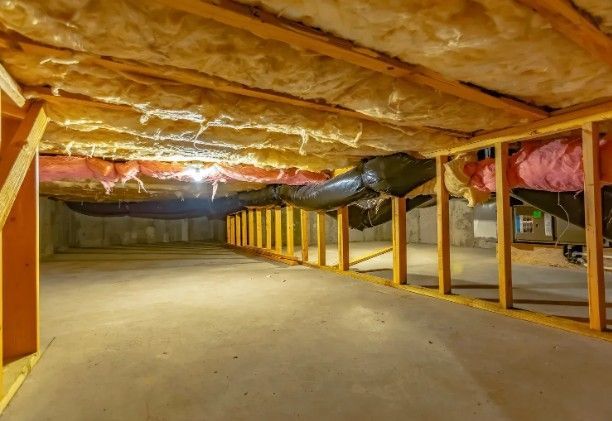
Unconditioned crawl spaces allow ground moisture to evaporate into the building envelope, while vented openings permit outdoor air to flow beneath the home and affect interior conditions. Evolution Sprayfoam, LLC addresses these issues through crawl space encapsulation, which creates a controlled environment by sealing the ground surface and closing off pathways for unwanted air movement. Homeowners notice the need when floors above the crawl space stay cold, when musty odors enter living areas, or when humidity levels remain high despite dehumidification efforts that cannot overcome continuous moisture sources below.
Encapsulation involves installing a vapor barrier over the crawl space floor and up foundation walls, sealing vents and other openings that allow outside air to enter, and often adding insulation to foundation walls or the floor deck above. The approach eliminates the two primary performance problems in crawl spaces: moisture migrating upward from the ground and unconditioned air flowing through the space and affecting the rooms above.
Schedule a property evaluation to assess existing crawl space conditions and determine the appropriate encapsulation solution for your home in Trenton, Kansas City, Holt, and surrounding areas.
What Proper Encapsulation Requires
The process starts with evaluating moisture sources, drainage patterns around the foundation, and existing ventilation that may need to be closed once the space is sealed. A heavy-duty vapor barrier covers the ground and extends up foundation walls to prevent moisture from entering the crawl space, while joints and seams are sealed to maintain continuity across the entire floor area. Foundation vents are closed and sealed, and any rim joist gaps or penetrations are addressed to stop air leakage between the crawl space and the living area above.
After encapsulation is completed, floors above the crawl space feel warmer in winter because cold outdoor air no longer circulates beneath the home and draws heat downward through the floor deck. Humidity levels inside the home drop because ground moisture can no longer evaporate into the crawl space and migrate upward, and musty odors diminish as the enclosed space dries out and remains sealed from soil contact. The building envelope performs more consistently because the crawl space no longer acts as an uncontrolled zone that undermines insulation and HVAC efficiency.
Encapsulation does not replace the need for proper exterior drainage, and any standing water or moisture intrusion issues must be corrected before sealing the space. The service works best when gutters, grading, and downspout extensions direct water away from the foundation, preventing moisture from accumulating beneath the vapor barrier where it cannot dry or drain.
Common Questions About This Service
Homeowners in Trenton often ask how encapsulation differs from traditional vented crawl spaces and what the process involves for their specific foundation conditions.
What is the difference between encapsulation and a vented crawl space?
Encapsulation seals the crawl space from ground moisture and outdoor air, creating a controlled environment, while vented crawl spaces rely on outdoor air circulation that introduces humidity during warm months and cold air during winter, often worsening moisture and temperature problems.
How does encapsulation improve moisture management?
A sealed vapor barrier prevents ground moisture from evaporating into the crawl space, and closing vents stops humid outdoor air from entering during summer, eliminating the two primary moisture sources that cause dampness, odors, and potential mold growth.
When should a crawl space be encapsulated instead of left vented?
Encapsulation becomes necessary when floors remain cold, when humidity and musty odors persist despite ventilation, or when insulation in the crawl space sags and fails because moisture and air movement undermine its performance.
Why must drainage be addressed before encapsulation?
Standing water or moisture intrusion from poor grading will accumulate beneath the vapor barrier if not corrected first, creating conditions where moisture cannot escape and may lead to foundation or structural concerns over time.
What happens to crawl space vents after encapsulation?
Foundation vents are permanently sealed to prevent outdoor air from entering the controlled space, and in some cases, the crawl space is conditioned with a small amount of HVAC airflow or a dedicated dehumidifier to maintain appropriate humidity levels year-round.
Evolution Sprayfoam, LLC evaluates crawl space conditions and recommends encapsulation solutions based on moisture sources, foundation construction, and the specific performance issues affecting your home. Request a detailed estimate to review options tailored to your crawl space's current conditions and moisture management needs.