Settled Slabs Lifted and Stabilized From Below
Concrete Lifting & Void Fill in Kansas City for settled concrete surfaces requiring stabilization and elevation correction
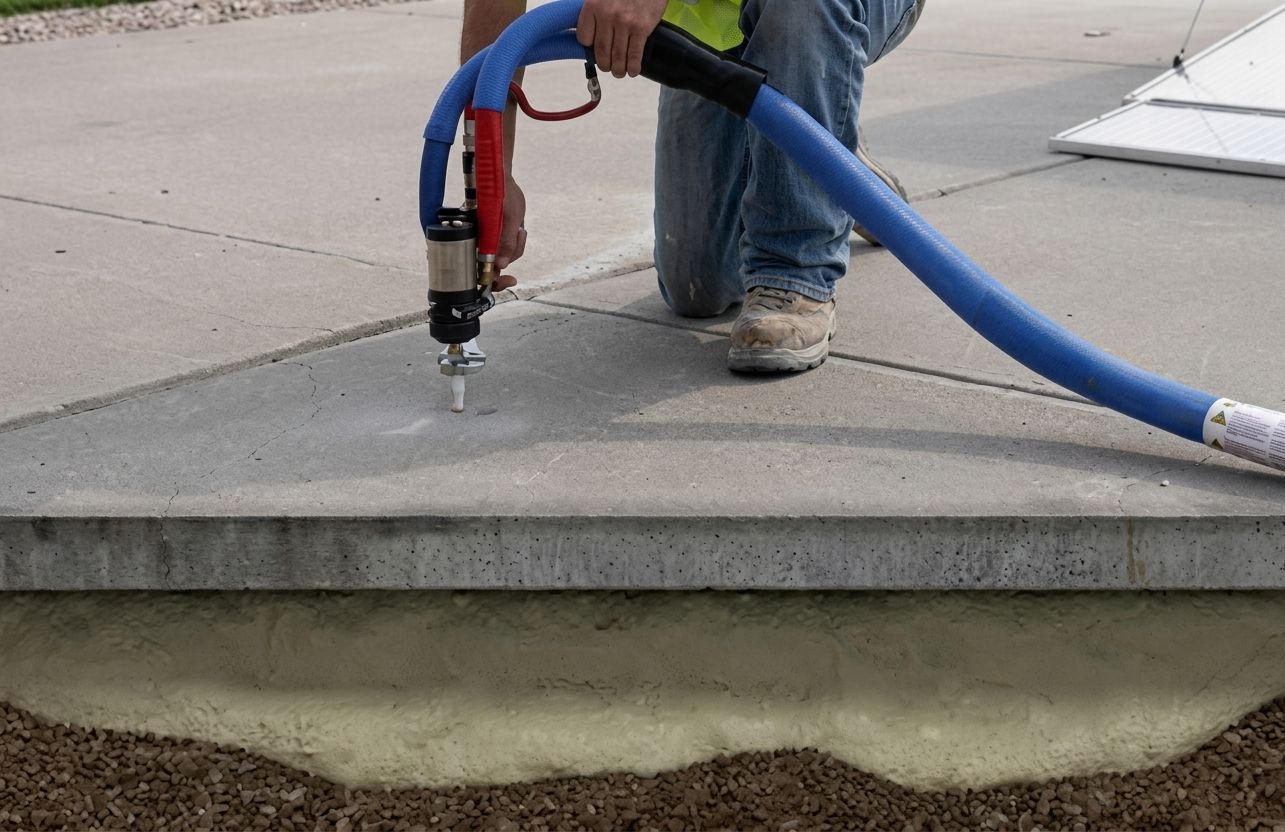
Voids develop beneath concrete slabs when soil washes out, compacts unevenly, or shifts due to poor drainage, causing slabs to settle and crack. Evolution Sprayfoam, LLC injects expanding polyurethane material through small access holes drilled into the slab, filling voids, lifting settled sections, and stabilizing the concrete without complete removal and replacement. Driveways, sidewalks, warehouse floors, and commercial slabs in the Kansas City and Trenton region settle when underlying soil erodes from roof runoff, plumbing leaks, or freeze-thaw cycles that displace subgrade material.
The polyurethane expands rapidly after injection, filling empty space and applying controlled lifting force to raise the slab back toward its original elevation. The material cures in minutes, allowing the slab to be returned to service almost immediately. This approach addresses the visible symptom—settled concrete—while also stabilizing the subgrade to prevent further movement, provided the underlying cause of settlement is corrected.
Schedule an evaluation to assess settlement causes and determine whether lifting is appropriate for your concrete.
What Changes After Concrete Is Lifted and Stabilized
Concrete lifting involves drilling access holes at strategic locations over the settled area, injecting the polyurethane material until the slab rises to the desired elevation, and monitoring the lift in real time to avoid over-correction or cracking. The expanding material flows into voids and cracks beneath the slab, filling gaps and creating a stable support layer that prevents future settlement. Once the material cures, the access holes are patched with color-matched concrete or mortar, leaving small, discreet repair points rather than large replacement panels.
Your settled slab is restored to its original elevation, eliminating tripping hazards, drainage problems, and uneven surfaces that interfere with vehicle access or building use. Water no longer pools against foundations or flows toward building entries because the slab slope is corrected. Concrete that was cracked due to unsupported spans becomes stabilized, preventing existing cracks from widening and reducing the likelihood of new cracks forming in adjacent sections.
Lifting works only when the concrete itself remains structurally sound—severely cracked, spalled, or deteriorated slabs may require replacement even if the subgrade can be stabilized. The method does not address settlement caused by ongoing water infiltration, active erosion, or foundation movement unless those underlying problems are corrected first. Property owners must identify and resolve drainage issues, plumbing leaks, or soil instability before lifting to ensure the repair lasts.
What Property Owners Usually Ask
Customers want to know how lifting compares to replacement, what causes settlement in the first place, and whether the repair will hold under continued use and weathering.
What causes concrete slabs to settle and create voids beneath the surface?
Soil erosion from water runoff, inadequate compaction during original construction, freeze-thaw cycles that displace soil, and plumbing leaks that wash out subgrade material all contribute to void formation. Kansas City's clay soils expand when wet and contract when dry, creating movement that destabilizes poorly compacted fill and causes slabs to sink into the resulting voids.
How does polyurethane lifting compare to traditional mudjacking?
Polyurethane is lighter, expands more predictably, and cures faster than the cement slurry used in mudjacking, which reduces the risk of adding weight that causes further settlement. The smaller injection holes required for polyurethane also leave less visible patching and reduce the number of access points needed to achieve the desired lift.
When should settled concrete be lifted rather than replaced?
If the slab is structurally intact, settlement is limited to specific areas, and the underlying cause can be addressed, lifting is typically faster and less expensive than replacement. Replacement becomes necessary when the concrete is severely cracked, spalled beyond repair, or when settlement is so extensive that lifting would not restore a functional surface.
What happens to the polyurethane material after it is injected?
The material expands and cures into a rigid foam that permanently fills voids and supports the slab from below. It does not degrade, compress, or absorb water, so it maintains its support capacity and does not settle like organic fill or poorly compacted soil.
Why is identifying the cause of settlement important before lifting?
Lifting stabilizes the slab at a specific point in time, but if water continues to erode soil or if drainage problems persist, new voids will form and the slab will settle again. Evolution Sprayfoam, LLC evaluates drainage patterns, soil conditions, and moisture sources before recommending lifting to ensure the repair addresses both the symptom and the cause.
Evolution Sprayfoam, LLC inspects settled concrete, identifies void locations and settlement causes, and determines whether polyurethane lifting will provide a durable solution for your specific conditions. Request an evaluation to explore whether lifting is appropriate or if other repairs are needed first.