Walls and Attics Built to Control Temperature
Residential Insulation Services in Trenton for homes with uneven temperatures and high energy use
Evolution Sprayfoam, LLC provides residential insulation services across Trenton, Kansas City, Blue Springs, or a surrounding area, and addresses performance gaps in attics, walls, crawl spaces, and other parts of the building envelope. Homeowners notice the need for this service when certain rooms stay colder in winter or hotter in summer despite the HVAC system running continuously. Properly installed insulation stops unwanted heat transfer at the points where conditioned air escapes and outdoor temperatures enter the living space.
This service involves evaluating the structure to identify underperforming areas where existing insulation has settled, degraded, or was never installed adequately. Air leakage around penetrations, gaps in coverage, and thin insulation layers all reduce the effectiveness of the building envelope, forcing heating and cooling equipment to work harder without delivering consistent indoor comfort.
Schedule a property evaluation to identify specific areas where insulation improvements would address current performance concerns.
What Proper Coverage Accomplishes in Living Areas
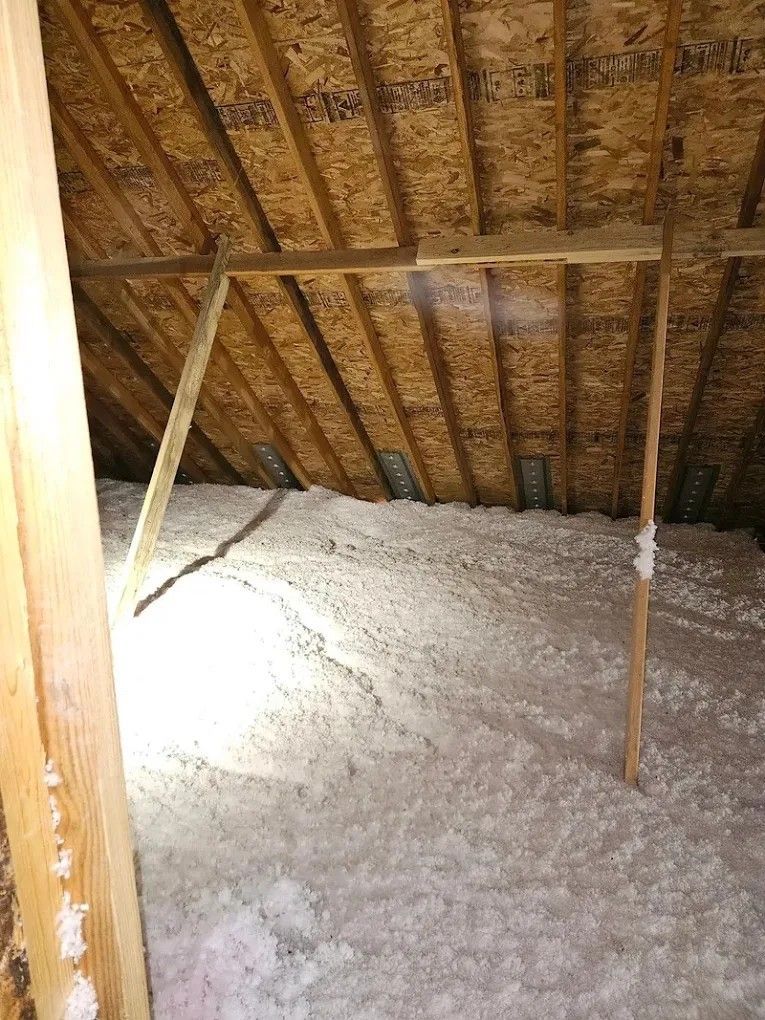
The approach depends on the structure, existing conditions, and where heat transfer is occurring most significantly. Attics often require thicker coverage to prevent heat from radiating through the ceiling plane, while wall cavities and crawl spaces need materials that conform to irregular framing and stop air movement at the same time. Each application addresses a different failure point in the building envelope.
After insulation is installed, you notice that rooms maintain more consistent temperatures without large fluctuations between the thermostat setting and actual conditions. Floors feel warmer in winter because less cold air infiltrates through the crawl space, and upstairs bedrooms stay cooler in summer because attic heat no longer radiates downward through inadequate ceiling insulation. The HVAC system cycles less frequently because conditioned air stays inside the envelope rather than escaping through gaps and thin coverage areas.
The service targets the specific areas contributing to poor performance rather than applying a uniform solution across the entire home. Thermal imaging or inspection findings guide material selection and installation depth, ensuring that the insulation addresses the actual points of heat transfer rather than covering areas that already perform adequately.
Questions Homeowners Ask Before Starting
Homeowners in Trenton often ask how insulation improvements will affect existing performance issues and what the process involves for different areas of the home.
What happens during an insulation evaluation?
The evaluation involves inspecting attics, walls, crawl spaces, and other envelope areas to identify gaps, inadequate coverage, and air leakage points where heat transfer occurs, often using thermal imaging to reveal temperature differences that indicate insulation deficiencies.
How does insulation in the attic differ from insulation in walls?
Attic insulation typically requires greater depth to prevent radiant heat from affecting ceiling temperatures, while wall insulation must fill cavities completely and stop air movement through framing gaps, each addressing different thermal dynamics within the building envelope.
When should insulation be added to a crawl space?
Insulation becomes necessary when floors above the crawl space remain cold, when moisture or humidity from the ground affects the living area, or when existing insulation has sagged away from the floor joists and no longer prevents heat loss.
Why do some rooms stay uncomfortable even with insulation present?
Existing insulation may have settled over time, leaving gaps at the top of wall cavities or creating thin spots in attic coverage, and air leakage around penetrations allows conditioned air to bypass the insulation layer entirely.
What determines the type of insulation recommended for different areas?
The structure of the space, accessibility, existing conditions, and whether air sealing is needed at the same time all influence material selection, with some areas requiring rigid materials and others benefiting from spray-applied solutions that seal and insulate simultaneously.
Evolution Sprayfoam, LLC evaluates your home's current envelope performance and recommends insulation solutions based on the areas contributing most to heat transfer and comfort issues. Request a detailed estimate to review options specific to your building's conditions and insulation needs.