Seamless Roofing That Combines Insulation and Weather Protection
Foam & Coat Roof Systems in Trenton for roofs requiring continuous insulation and waterproofing in one application
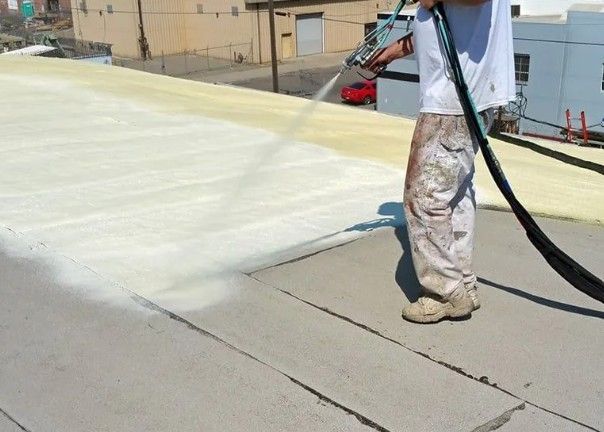
Metal roofs in the Trenton, Kearney, Olathe, and Kansas City region often develop leaks at seams, fasteners, and penetrations as thermal cycling and weather exposure degrade sealants and cause metal panels to shift. Evolution Sprayfoam, LLC installs foam and coat roof systems to address these vulnerabilities by applying a layer of spray foam insulation directly over the existing roof surface, followed by a protective elastomeric coating that creates a seamless, waterproof membrane. This approach eliminates the need for complete roof replacement when the structural deck remains sound but the existing covering no longer performs.
The process begins with cleaning and preparing the roof surface, repairing structural defects, and applying closed-cell spray foam at a specified thickness to provide both insulation and a uniform substrate. The elastomeric coating is then rolled or sprayed over the cured foam, sealing the surface against water infiltration, ultraviolet degradation, and wind-driven debris while maintaining flexibility to accommodate the roof's thermal expansion and contraction.
Arrange an evaluation of your existing roof to identify whether a foam and coat system is appropriate for your building.
What You Notice Once the System Is Finished
After installation, your roof surface is monolithic with no seams, gaps, or exposed fasteners where water can enter, and the coating's reflective finish reduces heat absorption during summer months. Roof penetrations such as vents, HVAC curbs, and skylights are encapsulated and sealed as part of the continuous membrane, preventing the isolated leaks that occur when individual flashings fail. The foam layer increases the roof's R-value, which reduces energy transfer through the assembly and helps stabilize interior temperatures in the conditioned space below.
You no longer see standing water pooling in low areas because the foam can be applied with tapered profiles to improve drainage toward existing scuppers and drains. The coating itself remains pliable rather than cracking or becoming brittle, so it responds to the roof's movement without tearing. Property owners with flat or low-slope metal roofs notice fewer interior leaks after storms and lower cooling costs during warm months, particularly when the original roof had minimal insulation or compromised metal panels.
The system does not require tear-off or landfill disposal of the existing roof, which reduces project cost and disruption to building operations. Roof condition before application is critical—if the deck has structural rot, unrepaired collapse, or widespread corrosion, foam and coating will not compensate for underlying failure. Coating reapplication is typically required every 10 to 20 years depending on weathering, foot traffic, and the coating product selected, but the foam insulation layer remains intact and functional.
Common Questions About This Service
Building owners often want to understand how foam and coat systems compare to traditional reroofing and what conditions make a roof a suitable candidate for this approach.
What types of roofs are suitable for foam and coat application?
Low-slope and flat roofs with sound structural decks work best, including metal, built-up roofing, modified bitumen, and single-ply membranes that are no longer watertight but structurally intact. Roofs with excessive ponding water, significant structural damage, or active interior leaks from deck failure require repairs before foam application.
How does the coating hold up under foot traffic and equipment?
The coating is durable enough for occasional maintenance access but not designed for constant foot traffic or heavy equipment placement without protective walkway pads. Trenton's freeze-thaw cycles and hail events can impact coating longevity, so periodic inspections help identify areas needing touch-up before small defects develop into leaks.
Why would foam and coat be preferred over a complete roof replacement?
You avoid the cost, time, and disposal associated with tearing off the existing roof, and the foam adds insulation value that most replacement membranes do not provide. The system also seals roof penetrations more effectively than traditional flashings, reducing the number of future leak points.
What is the expected lifespan of a foam and coat roof system?
The foam layer can last the life of the building when protected by the coating, but the coating itself typically requires reapplication every 10 to 20 years based on exposure, maintenance, and the specific product used. Recoating is far less expensive than replacing the entire assembly and can be scheduled proactively based on coating condition.
How does the reflective coating affect energy costs?
Reflective coatings reduce roof surface temperatures by 30 to 50 degrees compared to dark metal or asphalt, which decreases cooling load on HVAC systems during warm months. The foam insulation layer simultaneously reduces heat transfer in winter, creating year-round energy savings for conditioned buildings.
Evolution Sprayfoam, LLC inspects your roof to assess deck condition, drainage patterns, and penetration details before recommending a foam and coat system. Schedule a roof evaluation to determine whether this approach fits your building's condition and performance goals.