Conditioned Air That Stays Where It Belongs
Air & Duct Sealing in Trenton for homes and buildings with drafts and inefficient HVAC performance
Gaps at penetrations, open joints in ductwork, and unsealed connections between building components allow conditioned air to escape and outside air to infiltrate a structure continuously. This service from Evolution Sprayfoam, LLC targets those specific leakage points where air movement undermines heating and cooling efficiency. Property owners notice the need when certain rooms remain uncomfortable despite the HVAC system running, or when dust and outdoor air enter the building through pathways that bypass filters and controlled ventilation.
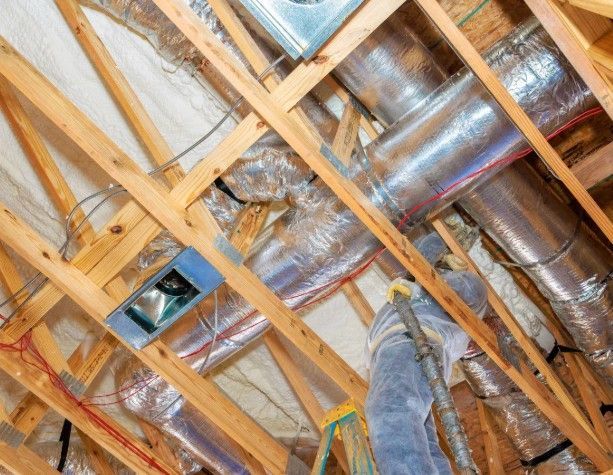
Air sealing involves identifying and closing gaps around electrical boxes, plumbing penetrations, rim joists, and other envelope openings, while duct sealing addresses joints, connections, and seams in the HVAC distribution system where forced air leaks into attics, crawl spaces, or wall cavities instead of reaching living areas. Both reduce the volume of air that must be heated or cooled to maintain setpoint temperatures.
Request a detailed estimate based on an inspection of your building's current air leakage and ductwork condition in Trenton, Olathe, Bonner Springs, and surrounding areas.
Why Sealing Leakage Points Works for Consistent Conditions
The process begins with an inspection to locate air leakage pathways that are not visible during a standard walkthrough. Gaps around recessed lights, at the junction between the foundation and framing, and along duct seams in unconditioned spaces all contribute to performance loss. Sealing materials vary depending on the location and size of the gap, with some areas requiring expanding foam and others needing mastic or tape rated for long-term adhesion.
After sealing is completed, you notice that rooms reach the thermostat setting more quickly and maintain that temperature without the HVAC system cycling as frequently. Drafts near windows, outlets, and exterior walls diminish because air no longer flows through hidden pathways in the envelope. Ductwork delivers more conditioned air to registers and returns, reducing the temperature difference between supply air and room air that indicates leakage upstream.
The service does not involve replacing entire duct runs or tearing into walls unnecessarily. Instead, targeted sealing focuses on accessible junctions and known failure points where leakage occurs most often, such as boot connections, plenum joints, and duct board seams that separate over time as materials expand and contract with temperature changes common in Trenton's climate.
Answers to Frequent Service Questions
Homeowners and building managers ask how air and duct sealing differs from insulation and what results they should expect after the work is finished.
What is the difference between air sealing and insulation?
Air sealing stops air movement through gaps and penetrations in the building envelope, while insulation slows heat transfer through solid surfaces, and both must work together because air leakage bypasses insulation entirely and reduces its effectiveness.
How does duct sealing improve HVAC performance?
Sealing duct joints and seams prevents conditioned air from escaping into attics or crawl spaces before reaching the intended rooms, allowing the system to deliver more air through registers and reducing the runtime needed to maintain setpoint temperatures.
When should air sealing be done in relation to insulation work?
Air sealing should occur before or during insulation installation because sealing gaps and penetrations first ensures that insulation does not cover leakage pathways that allow air to bypass the thermal barrier.
Why do drafts persist even after new windows are installed?
Windows are rarely the primary source of air leakage; gaps around outlets, penetrations in attic planes, and unsealed rim joists allow far more air movement than window frames, and sealing those hidden pathways eliminates drafts that new windows alone cannot address.
What tools identify air leakage that is not visible?
Blower door testing and thermal imaging reveal pressure differences and temperature variations that indicate air movement through envelope gaps, allowing technicians to locate leakage points hidden behind finishes or in attic spaces.
Evolution Sprayfoam, LLC uses inspection findings to target air and duct sealing work at the specific points contributing to performance loss and comfort issues. Schedule an inspection to identify leakage pathways and review sealing options for your building.